
For those hot and sticky dreaded months of summer – here are a few ideas for the garden and ways to make the summer for enjoyable.
Think native environment.
Create your landscape with plants that are salt-tolerant, drought and heat tolerant, native and wind resistant. Of course, we can’t have all of these things but here are some pointers. Especially on the coast, it’s a great idea to use plant material that will last given the harsh beach environment. Trees must be staked, adequate irrigation established, and natives do well here like sea grape, sable palms and beach sunflower.
Create ample shade.
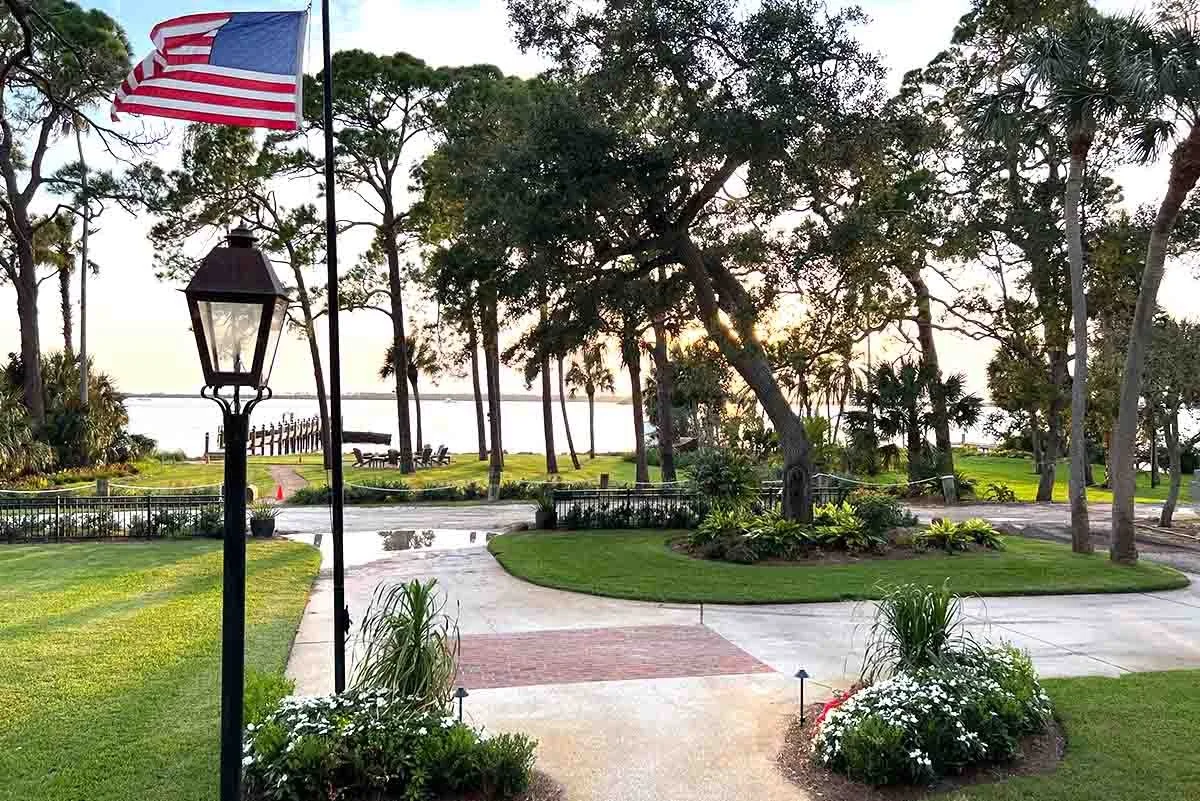
Plant palms and trees. Your south and west exposures can use a break from the sun so know which direction your home faces. Be sure to stake trees that have not quite established yet. In a few years, you will enjoy the shade provided and a reduction in your electric bill.
Keep it cool.
Keep your established landscape cooler with a heavy layer of mulch or pine bark and make sure your irrigation system is optimally working. Shallow wells are an option which saves money and uses ground water not drinking water.
Check your drainage.
With the amount of rain we accumulate in our summer months, drainage has become essential and even required when building a new home. Make sure your gutters are working properly and install underground drains if needed. Underground drains are a popular item these days to get the water to where it belongs and off of your property.
Relax with water.
Fountains, pools, spas and plunge pools are all popular in Florida. There is upkeep of course but can be a great way to relax and cool off. We design pools of every shape and size and all price points. Pools generally take about six months from start to finish which includes design, permits and construction.
Be hurricane ready.
Our most popular summer topic these days. We had a rough 2024 season that caused major amounts of damage – few homes were spared. Here are a few tips: Choose plants that work in your environment – they will do better in storms. Stake newer trees and reinforce if needed. Make sure gutters are clean and drainage on your property is adequate. Bring in potted plants, furniture and loose items that might blow around. Evacuate if needed and always stay prepared.